Showing posts with label Seahawks. Show all posts

Friday, February 12, 2016

Patience, Seattle

One year later, I can now hear "Bittersweet Symphony" without becoming anxious or cranky. Certainly not at the Seahawks. The fact that they're a bunch of tough, crazy misfits who enter a stadium to orchestral music instead of 1980s metal makes me smile every time I think about it. No, I'd get cranky at the maddening circumstances surrounding Superbowl 49.

At this point it is bittersweet, though.

This past season ended up being pretty great even though it wasn't supposed to be (there wouldn't have been anything to forgive if they had not made it to the playoffs), but the coming season is going to be awesome. 

If I'm right, this season was never intended to be a full-throttle year. Sure, Wilson and everyone else wanted to win because that is part of what makes them great. They'll never take the easy way in favor of the better way. They want to do the best they can for the fans that love them. Sure they want prove that the loss to the Patriots was not definitive. That isn't even a question.

Remember the way Carroll treats Marshawn Lynch? He gives superhuman effort, then gets to rest on the sidelines for a bit. Also, we've all noticed Russell Wilson's "baseball slide" and his penchant for self-protection. He is one of those rare individuals who somehow manages to give 110% even though that's statistically impossible... it is what they mean when they say he "makes something out of nothing"... but he is very careful not to put himself at risk. This isn't just Wilson's idea. He and Pete Carroll have had conversations about it.

All effort is not created equal. There is a clear boundary for Carroll and his Seahawks between constructive vs destructive effort.

In order to get the best out of people, Carroll pushes them to be better but doesn't burn them out. Everything in nature has periods of rest, which is important because during these periods the plants, animals etc. go through processes they can't perform while fully active. For example, you can force plants to bloom out of season in a hothouse but it isn't good for them because they're not gathering the nutrients and recuperating the way plants should be allowed to do.

People who grow commercial hothouse flowers don't care about that, though, because they just want a big bright bloom. Similarly, most coaches would force their players to "bloom" all the time, which uses them up quickly. Remember the brilliant but woefully short blooming of RG3?

Carroll isn't like that. Lynch is a microcosm but the same principle applies to the team as a whole. We all want to see our boys return to the Superbowl and would love to see them win. It will come. Patience, Seattle. 

I'll bet you I'm right about this as an intention. Oh, sure, I have a couple of concerns about the mechanics of how it will work-- keeping different players, their roles evolving and so on--  but we can discuss those another time.

Sunday, January 17, 2016

Maintenance

Dear 12s, 

Remember how this was supposed to be "a rebuilding year?" 

Remember how we were so busy getting our feet back under us from x2 Superbowl appearances that we weren't even supposed to be in the Playoffs? 

To be honest, OsQ is relieved. Without question, our guys hate losing and will play as hard as they can for the 12s. However, there is a difference between shining bright and burning out.

See, football teams that pound themselves to pieces grasping for the Superbowl year after year quickly burn out and become a joke. Athletes know this. To quote L, "I don't pound my own training hard year after year, week after week. I use what's called periodization. Periods of higher intensity and periods of maintenance fitness throughout the year. I'll burn out otherwise." 

This is a valid concern for football teams as well as for athletic individuals. Did you ever wonder why we worry about very few teams from the East divisions? Here is the Way of It. 

The Giants, Cowboys, Eagles, Bills and so on tore each other to shreds in the 1980s. They slugged it out in the post season and grasped at the Superbowl year after year. The result was that they collectively burned out and the East still hasn't recovered. I mean, who in the NFL really thinks about the Bills or Eagles right now, let alone worries about them?  

Seattle is new to being a force in the NFL. Let's ask ourselves an important question. 

Do we want our Seahawks to burn themselves out and then go back to being ignored? Or do we want to accept that in order to have a legacy of greatness, there are going to be maintenance years? 

 The Seahawks do not have irreparable issues. They do, however, need to take some time to work on communication and clicking together faster. That's the way Carroll Mode is set up.  They need some time away from the media frenzy and intense stress and possibility of injuries in order to stay mentally and physically healthy. 

This was a maintenance year. For all that, they gave us an exciting season and a Playoffs appearance. I hope the 12s will be smart and acknowledge this. 

Sincerely, 

OsQ

P.S. Remember how our Superbowl victory came after a short season...?

Sunday, December 27, 2015

The Way of It:
'Air Coryell,' Jim Hart, and 'bend but don't break' defense

This is about “bend but don’t break” defense technique, the legacy of a passing strategy first invented by Don Coryell and implemented by his strong-arm quarterback Jim Hart.

During the Seahawks-Browns game (12/20/15) you might have been puzzled and annoyed because our defense kept giving up first downs, usually on the third. This happened over and over again. They defense let the Browns get halfway across the field or even to the 20 yard line before finally stopping them, but doing so with authority. We were even treated to the Mebane Belly Dance after he sacked Manziel.


"But why couldn't you do that until right now?" asked Hawks fans. "You should be giving them something else for Christmas, not first downs!"

The defense only gave up one touchdown and a couple of field goals, though. On the last drive, we even got a pick. This leads me to believe the Seahawks were experimenting with “bend but don’t break.” They let the Browns trudge across the field, working hard for every first down (remember, the first was usually given up on the third) and allowed them to have their goal in sight before an authoritative stop, sometimes with a sack thrown in. Over and over.  

It is possible that the defense were having a bad day, but that is not what the score says.

The score says that the Seahawks were trying out a new variation of an old theory called “bend but don’t break.” You shade the receivers deep (cover them but do not let them get past you), which opens up the potential for short plays but keeps the long ones from getting out of control.

One of the reasons that some defensive teams go with “bend but don't break” is that a short field is much easier to defend than a long field. When the other team is on their own 20 yard line, they have tons of room to go over the top. If the defense plays tight coverage, it is highly likely that one receiver will put a good move on the defender and get way past him. The fact is, most defenders in tight coverage inevitably end up between the quarterback and receiver. Hopefully only by a few inches at first but in 2 seconds a good receiver can stretch that distance into a few steps. This isn't too bad since you want to be in the way of the pass when the ball is in the air. Ah, but if the quarterback is going over the top for a deep pass, then a few steps behind means the receiver can pull away for a touchdown once he gets the ball. Here is Tyler Lockett doing exactly that off a Russell Wilson pass for 49 yards. 

So a good defender tries to delay that break point (that point where there is separation of more than one step) to further down field. How far down the field is safe? Most people would say about 30 yards because surely the defensive line will put the quarterback under pressure by the time the deep receiver is that far down the field. However, a quarterback with a strong, accurate passing technique can throw the ball (on a high “rainbow” trajectory) at that same point in time but it won’t come down until the receiver is 50 yards down field. So really the defender is responsible for about fifty yards. That's at a minimum!

I say it is the minimum because the limiting factor here is the quarterback's arm strength and long ball accuracy. Most quarterbacks can throw 50 yards. To put this in perspective, guy who went through training in high school football— not the quarterback, but one of his high school team members— throws for about 35 yards.

Interestingly, Eli Manning and Russell Wilson can both throw for 65 yards with accuracy far above the average quarterback, though they have very different reasons for this. Part of that is physical. Wilson is tight knit and muscular while Manning is long and lanky. Much more of throwing long, accurate passes has to do with technique, however.


Real passing ability comes from how you wind up to throw and your point of release of the ball, but also it comes from your hips and even your feet. This is why Phil Simms often comments about an interception “the quarterback threw that off his back foot.” That means he did not step forward and rotate his hips into the throw, and that's why the ball did not have that "pop" when the ball left his hands. Sometimes Simms notes that improper technique but the ball does have some "pop" anyway, in which case Simms says, "That was all arm!" partly in admiration and partly an admonition to do it right next time.

Here, in a nutshell, is the difference between a quarterback who can unwind his body with maximum efficiency for a long, wicked-accurate pass versus an inefficient quarterback who expends a lot of energy for a passthat does not go very far: Rodgers and Tebow, respectively. Rodgers, Manning, and young Wilson all exhibit proper technique although they have three different builds. 

Where am I going with all this? Why, we are going all the way back to the beginning of long passes. Back in the day, it wasn't this way at all. Long bomb passing technique did not matter as much before the 1970s. 

The start of 50 to 60 yard strategy came from a man named Don Coryell. “Air Coryell” described his philosophy and his scheme at a time when the running game had an overwhelming emphasis across the NFL. One could safely say that Coryell was 30 years ahead of his time.


Before Coryell's time the St. Louis Cardinals were a joke. After his time they would be a joke again (then they’d move to Arizona, where they are today) but during the 1970s they were not only a terror for the NFL, they were a bewildering terror. The secret ingredient that Coryell added was his passing scheme that could score from anywhere, at any time, developing pass route combinations and timing concepts are used to this day.  He even the idea that receivers ought to 'read' the defense and run the right route based on that. Yes, that was a concept that the Giants used until recently. All these innovations back then is why smart defenses today have to use the "bend but don't break" philosophy.

This defensive structure is the legacy of Don Coryell and his strong-arm quarterback Jim Hart, who once threw a pass that was in the air for 80 yards! If Wilson and Manning have “pop,” Hart had “boom.” The “Air Coryell” strategy would simply not have been as spectacular without Hart. 


On shorter passes Hart was known to throw with such velocity it was called a "rope," which means the ball had an incredibly flat trajectory. A Jim Hart pass could sprain a receiver’s fingers. Rumor was that some of those 'sprains' were actually fractures. Yes, your eyes are popping open. They should be. 

Here’s to you, Jim Hart and Don Coryell. OsQ is praising you like we should, for innovations that changed “The Way of It” for the NFL.  Back when people hadn't seen it before, this strategy was baffling and frustrating.

My father, one of generations of Giants fans, was treated to the “Air Coryell” circus twice a season as a kid because the St. Louis Cardinals and the New York Giants were in the same division at the time. He had this to say.

"That's how you throw it!" my father [OsQ’s grandfather] would blurt out during a game. It was also a lament because the Cardinals were going to beat the Giants, and we noticed that Harts passes were hard to intercept. The defenders seemed to be afraid to try to catch it! And they couldn't because you had to get used to that velocity. Surely there was or is some quarterback who could throw the ball a few yards farther, but for me its Jim Hart who is the king of the long pass.

Sadly, neither Coryell nor Hart are in the Hall of Fame. While Coryell is known to astute football fans, Hart has been all but forgotten. 

What they were doing back then would not seem strange to most fans because they would recognize it all as common pass plays today. It has become normal fare in the NFL. Maybe that's part of why people don't remember Coryell and Hart? People have a bad habit of supposing that what is “normal” today has always been there, which means a kind of amnesia in respect to the ones who first invented the things we take for “normal.”

In the Madden-Coryell clip from earlier, Madden expresses understanding that he is in the Hall of Fame because he's standing on the shoulders of an innovator. His next funny story in that clip is a variation on that theme: at the conference, everybody else went to the speaker about "I Formation," but Madden figured he'd go to the guy who taught the speaker. Why didn't anyone else do that?

Why indeed. 

___
"The Way of It" is a collaboration between Ada Fetters and Michael Howard.

Monday, December 14, 2015

Football terms

In this video, Richard Sherman shows how smart and sneaky he can be and cheerfully explains how he does it. I love when he smiles and says quietly, "I am showing them an illusion of sorts." The guy has a mouth on him to rival Muhammad Ali, but also has a meticulous, analytical brain and he isn't shy about saying that he values that over his athleticism even within the game. He seems to have an almost precognitive quickness sometimes... because his brain has broken his opponents down to their gears and cogs. 
The phrase "Hiding in the tall grass" delighted me when I first saw that game because of the mental image. There was something true about it, even though I didn't know quite what at the time. This is such an evocative way to quickly nail what Sherm is explaining in this video.
Obviously the turf is the same height all over the field and a player can't actually hide, but that is not what this means. It means that someone-- in this case the predatory cornerback-- has manufactured tall grass within the opposing quarterback's brain. It isn't quite a blind spot. As Sherm went to some effort to explain, he has created an illusion. He wants the opposing quarterback to think he is to the situation. They want so badly for the play to work that if he sketches in certain movements, they'll believe it is working... right until he jumps out of the tall grass to pick the ball.
There are many other phrases like this in football and many of them are so common that announcers don’t feel the need to explain them. Hence many fans don’t know what they mean or where they came from. Here are some of them. We'll start with some easy phrases and work up to the more technical ones.
"Pick" means interception of course. "Pick-six" means an interception followed by a run to the end zone for six points.
“Move the chains.” Get a first down so the officials will move the chains attached to the big orange markers on the sidelines that tell people where the next first down is. "Stay ahead of the chains" is essentially the same thing. It means your offense doesn't meander around in the same area until the fourth down. 
“Man coverage.” It does not refer to the uniforms. It refers to a player who is assigned to deal with one other specific player and so covers that one man. Then you have “zone coverage” which is of course when a player is assigned a general area to keep track of instead of one guy.
“Run a flat.” This sounds like the guy was running and was flattened by Kam Chancellor...


...or was dealing with a ball deflated by Tom Brady… 

...but no. It just means a man isn’t running toward the end zone. Instead he runs “flat” along the yard lines, not across them, usually to fool a corner or safety.
“Running game / pass game.” Exactly what it sounds like. Hand the ball to Marshawn Lynch or Thomas Rawls so they can run it. Or, pass it to Kearse, Baldwin or Willson. The “game” part of it refers to how well it works out in general for the team. E.g. “The Vikings are built around their running game.” Or “I wish the Niners would stop putting half their defense in the backfield so Wilson can try his pass game. Oh well, if they’re not going to respect Lynch, we’ll stay with the running game.”


“Throw over the top.” Um, doesn’t the ball always go over the top? This term doesn’t refer to the heads and grabby hands of the players. It refers to whether the quarterback throws in front of the main line of the defense or past it, away up the field to where the deep receivers are running around. So if Wilson completes one of those beautiful arcing passes for a 47 yard gain, that’s “over the top.” “Underneath” means that he threw to a man relatively nearby for a 5 or 10 yard gain.

“Sluggo.” Is it the comic book character?


 Nope. To explain this, we also have to explain another term, “slant and fade.” “Running a slant” means that the player runs diagonally, like a bishop in chess. However, if they’re in the red zone and don’t have much room, this becomes a “slant and fade.” That means they “fade away” into the corner of the end zone and the quarterback throws the ball high over the defensive back. The trick there is that the receiver really doesn’t have much room and so has to work to keep their feet in bounds when they come down with the ball. “Slant and fade” is also known as “slant and go.” Mumble that repeatedly and quickly when the clock is ticking and it becomes “sluggo.” FYI, Sherman’s famous “tip”off of Crabtree was an attempted sluggo by Kaepernick.

“Sell the slant.” A fake-out. The quarterback is counting on the defense watching him carefully and so raises his arm, giving an awkward twitch that looks to a defensive player like the QB going to go ahead and pass, so they jump onto where they think the ball is headed. This, in the hope that the receiver will use that momentary hesitation by the defense to accelerate, get some space, and be relatively isolated by the time the ball does get to him ‘way back in the corner. E.g. "The Superbowl-winning Manning - Burness pass was a sluggo in which Manning sold the slant." 

"Pump-fake.” Nothing to do with illusory high heels. 

It is a more generic term than “sell the slant” for acting like you’re going to pass to one guy and then going for another, sometimes a guy who has run a flat or sometimes a guy who has run further away down the field. E.g. "Wow, we sure know how to use Tyler Lockett's speed to capitalize on the pump-fake." Or, we hear this all the time, “Wilson pump-fakes left, draws the blitz…”

"Hunh? What’s drawing the blitz?” It means you bait the defensive guys and get them to rush up close to the line in an attempt to quickly sack you, so there are fewer guys in the back of the field. Then if you want you can throw “over the top” for a long pass. 

"Trips" does not refer to when the turf grabs someone’s shoe the wrong way. It is an offensive formation with three wide receivers on one side of the field all near each other. That means you either don't have a tight end or a fullback. Remember, you can only have eleven guys on the field so if you have a triplet of wide receivers, you have to take away from somewhere.
Meanwhile, "Jumbo" is when you have three tight ends (tight end can be an offensive lineman or maybe work as a wide receiver but they’re heftier than a typical receiver) stacked up instead of a lot of wide receivers. "Jumbo" formation started with the Giants’ coach, Parcells, and was named after one of his players. Coach was basically saying, "Our guys are bigger and stronger than yours. We will broadcast that we are going to run the ball. Even though you know it, you can't stop us.” See, the Giants were known for brawn and it was practically a given that their big ol' tight ends weren’t going to accelerate down the field for a pass. Instead they'd help the Giants trundle through the defenders. The Seahawks are different in that Willson and Helfet, our tight ends, are on the lighter, faster end of people able to play that position. Oh, they're not as fast as our wide receivers, Baldwin, Kearse and Lockett, but our “jumbo” would still look more like “trips,” which is why we typically don’t do this.
“Mesh” refers to the middle of the defensive line. You know, the place with all the huge guys that looks like pots and pans banging around if you don’t know any better. E.g. “Tukuafu plows into the mesh.”
“Pinching the D-line.” This sounds like a complaint a lady would make about a bra that doesn’t fit, but it just means to gather all the defensive guys together in the middle in order to jam things up there. E.g. “It’s first and goal. The Steelers are pinching the D-line so they can try to stop Marshawn Lynch.”
"Spread" (on offense) is when you have no tight end and no fullback (or possibly no halfback) and you have four wide receivers all spread out. Quadruple wide receivers. All this switching players in and out will hopefully help to clarify why the Seahawks get so many penalties for having too many players on the field.
“Shotgun formation” (e.g. “Wilson in the shotgun…”) No, he isn’t about to be launched out of a cannon. It refers to how long a "barrel" the quarterback is looking down. Shotgun means he is six feet back from the line of scrimmage and is looking down a long barrel. “Shotgun with an empty backfield” means the running back isn’t out there. “Shotgun single back” or “Shotgun with Lynch in the backfield” means just that. Lynch the running back is there with Wilson. “Shotgun double back” or “two running backs” means that Lynch and another RB, let’s say Rawls, are both there. They can help protect Wilson while he sets up a long pass “over the top.” Or they can run a few yards for a short pass “underneath.” This is the kind of versatile formation that the Seahawks love to do. It gives us many options.
“Pistol formation.” The quarterback is only three or four yards back from the line of scrimmage. So he’s looking down a short barrel. The pistol formation will never have an empty backfield. There would be no point in doing that. A pistol with an empty backfield would put the quarterback closer to the guys who want to clobber him, without offering the advantage of being able to hand the ball to the running back. So he’d have to pass from close up, which makes no sense. It'd do less than no good for anyone, but especially not for a short quarterback who has to work to see over the linemen.
“Read option.” A short way to say “Wilson runs the ball.” If none of the receivers are open and the quarterback reads that defensive end (guy defending the end of the opposing line) is distracted by something else, the quarterback will happily run around the line.

That concludes this article on football terms, but if you have questions about other terms that have become part of the scenery and you suddenly realize you don’t know what they mean, let OsQ know. 

Sunday, December 13, 2015

Seahawks vs Ravens

Today the Seahawks finished up 35 – 6 over the Baltimore Ravens.

Thomas Rawls was tackled badly and had his leg rolled under him for an ankle injury. They kept him out of the Ravens game and we're all waiting to see when he'll be back. Hopefully next week. He walked off the field and wasn't limping. They probably wanted to be absolutely certain about him precisely because we don't want to lose him. Better to be cautious and keep him out for one game-- and a game that isn't going to be the toughest of the year-- than have the season go wrong.

It's sad that Graham is out but that was not the worst thing that could have happened. Luke Willson is talented enough to play the position without problems and Helfet makes a good stand in. However, if Rawls was really hurt that would be a very bad thing for the Seahawks season. It is wise for them to be cautious with him especially since Marshawn Lynch had to have abdominal surgery and probably won't be back soon.

They are also cautious with Russell Wilson. If the Hawks are up by thirty near the end of the fourth, they'll take him out and put Tavarez Jackson in. Wilson remains watchful and serious on the sideline, of course, unless Richard Sherman comes over and makes him laugh. Which he does. You can see Sherm's eyes crinkle up as he's trying... and trying again... and then Wilson starts to laugh.

Baldwin and Kearse were amazing and Luke Willson was also competent.

Sherm got a pick. One of the Ravens grabbed his dreadlocks and used them to throw him down. Naturally that was a penalty. You can't do that. Afterward he was joking about it with his teammates and rubbed a young assistant's shaved head, and I agree with the local announcer that it looked like was saying "If I had hair like yours, that would have been a pick-six!"

Wilson was handing out touchdown passes like they were candy. After yet another to Baldwin (turning the Sherman pick into a touchdown), Baldwin and Wilson talked on the sidelines and appeared to have a moment: Baldwin was smiling but tearing up and scrubbing his face with the side of his hand. 


One of our OsQ correspondents raised questions about whether or not Wilson's athleticism would end up hurting him the way it did RG3 and and often does other mobile quarterbacks. I am encouraged by what I saw today. The Baltimore defense was very enthusiastic about shutting down the running game today... and so Wilson only ran the ball once, when he saw a big, safe gap because the defensive end had gotten distracted by something else. In other words he did not put himself in danger just because he's used to running the ball. That would have been so easy to do, to feel pressured because Rawls was gone, to take unrealistic responsibility and take risks. But he didn't. He was patient and made excellent use of his receivers instead.  

The Good News: 
The Seahawks made a decision to play for each other and have followed through to great effect. 

The Bad News:
Various injuries including Kam Chancellor's tailbone injury. OsQ is waiting to see who will return and when.

The Question:
Will the Seahawks continue to show this excellent combination of enthusiasm, versatility and in-game wisdom?

Sunday, December 6, 2015

Proven

Here is young Wilson as a rookie, playing against the Rams. He was sacked a lot in that game but even then showed his trademark positivity and ownership of mistakes.

I remember that game. Back then I was bemused by this sleepy-eyed quarterback who was physically deranged several times but refused to let it derange his composure.

It was entirely appropriate for the announcers to remark on him proving himself in his rookie season. That's what you do for any rookie. He still had a lot to learn. It was a big deal for a relatively untested rookie to stay focused after getting sacked several times and to win his game against a very physical team like the Rams.

He was still proving himself to his teammates, too. They were watching. You could see them even in the video clips, oh yes, because they needed to find out whether this Wilson kid would start whining, or throw a tantrum, or start making bad decisions. They didn't know him all that well yet. Instead of doing those things, he looked for a way to improve communication and change his strategy to be more effective. 

Even his coach was proud of him for his work in that game. Until your guy is in a situation like that, you don't know what he'll do. So that was kinda cool.

The other reason why I send this, though, is because I noted an irritating similarity between the things said in this rookie game and the things said about Wilson now.

After three great seasons, two NFC West championships and one Super Bowl ring, it sounds condescending when people still say those same things. Here is an article written just last week aboutthe Steelers game. Sadly, this isn't atypical. 

While the writer did say Wilson's career was "already stellar," they added condescendingly that "he showed it's possible for him to be one of the main reasons his team can win against a good squad."

So... what... they were just playing mediocre teams until now...? Or wasn't Wilson part of why they won...? I am genuinely not sure why people still say things like this about him. 


My point is that if you look at when he really was still proving the qualities / abilities and compare that to the 2015 Wilson that his coaches, teammates, and 12s are able to rely on, it seems ludicrous for anyone to say that he's "proving himself" today.

Saturday, November 28, 2015

Uniform Silliness

In the recent past the Seahawks had rain-colored uniforms with rain-colored numbers and rain-colored accents. This reflected the weather patterns of the region but it made our players seem like they were trying to literally blend into the scenery.


Since Pete Carroll took over the blue has gotten darker, the metallic pattern made the numbers look tougher and the bright green accents give the uniforms flair. Most Seattle fans probably agree that this is an improvement. This uniform still represents the region but gives the team an emphatic presence.


In the spirit of silliness, here are some observations about the different logos and uniforms across the NFL.


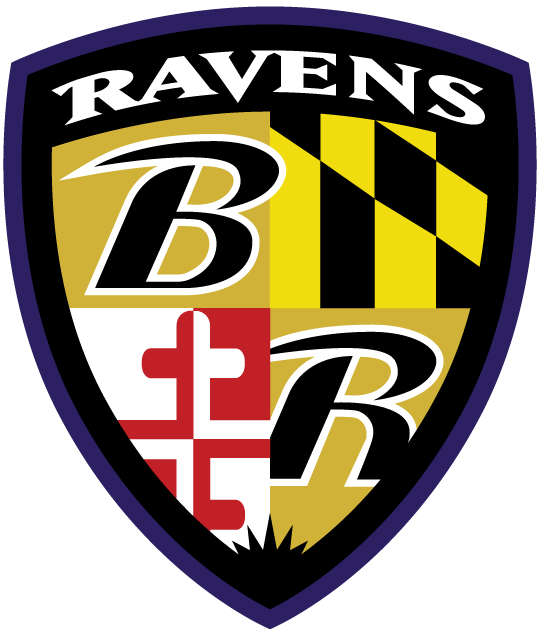
Ravens strike fear into the hearts of poets as they ponder “weak and weary, Over many a quaint and curious volume of forgotten lore.” However, the Baltimore Ravens’ logo is less than awe inspiring. A quirk of the eye makes the raven look concerned. “It does not look like it’s ready to fight,” said Michael Howard. Further, someone must have thought people might not get the association and added a letter B to the raven. It is not a good idea to put a letter on a logo that must reverse: the B has to turn the opposite way on the other side of the helmet, which effectively makes it two different logos.


At least they decided to use the raven for the helmet. They could have used the shield. 


The New York Giants also have letters on their helmets, but because this is the only thing on the helmet-logo, they can reverse the big, readable letters from one side to the other without the logo suffering a change. New York made a good decision in staying with the letters of their state or team name, which are more identifiable than trying to create a giant (which would defeat its own purpose on the scale of a helmet). They are a traditional team that doesn’t fuss with their uniforms so while there is a craze for retro uniforms this year, I don’t know if the Giants would get much out of switching them.


The Dallas Cowboys come from the Lone Star State. They went with silver uniforms and a big bold star on their helmets.  This logo is not artsy but Texas is more “wild west” than “artsy” anyway. The star does exactly what it is supposed to do: captures the spirit of the team for the fans and lets them know immediately which players in a scrimmage are theirs.


The Pittsburgh Steelers have a good-looking logo. It is historic, bold and unmistakable for that of any other team. It has the word “Steelers” on it, which is not reversible within the image, but they made the good decision to only have the logo on one side of the helmet rather than mess with the look of it.


However, in 2015 the Steelers are wearing “bumble bee” uniforms from 1934. These are a different story. Striped shirts and knee-highs are cute in themselves, but to quote L, “This is something that works and is cute in nature for a bumble bee but does not translate well to a football team.” Also the numbers look as if they are drawn on paper and then pinned to the jerseys.


The Oakland Raiders are a tough, old-school football team and their logo shows exactly that. This logo is such a busy mixture of things that it ought to be a disaster: a crest, two crossed swords, and a guy wearing both an eye-patch and an old-fashioned football helmet. As if that wasn't enough, it also has the word RAIDERS on it. However, it is so crazy that it sails all the way around and becomes amazing.


Perhaps the Miami Dolphins were trying for a similar theme with their retro 2015 uniforms but unlike the Raiders they do not get to amazing. Their dolphin is either jumping through a hoop or across the sun. For some reason the dolphin is wearing a helmet which has an M on it because while they didn’t feel the need to make the sun/hoop clear, the fact that this is Miami needed to be established beyond all doubt. To be fair to the Dolphins, their modern logo does not wear a helmet. The sun is a little clearer and there are no letters. This turns their logo from “WTF” to “oh, it’s a dolphin.”
I will also say that no one else in the NFL wears turquoise blue and orange.

The Cleveland Browns do not wear the “brownie elf,” opting instead for plain orange helmets.  This is wise.

The Browns have perhaps widest aesthetic split in their uniforms: the retro chocolate-brown uniforms might not be bright but they suit the name, look old-fashioned in a gritty "play in rain or shine" way, and are unique. The orange version is an unfortunate shade meant to be different from the Bengals. However, the two are still similar enough to be confusing in scrimmage and the Browns’ shade of red-orange somehow triggers afterimages on the television screen.


The Cincinnati Bengals’ helmets look great. The black tiger-stripes against the bright orange are striking. I must address the elephant in the room, though. Their uniforms make the huddle look like Cone-henge.


Tigers are orange and black. Ravens are purplish-black. Stars are silver. So what colors do you pick for rams? The St. Louis Rams said “to hell with it” and chose blue and gold. Their helmets are the most simple and effective in the league. Further, the gold ram-horn swirl makes the players look like they are about to lower their heads and move the chains.  Note how the shoulder accents echo the horns. 


The Cowboys’ star and the Rams’ horns are simple and effective. However, the Minnesota Vikings’ horns do not achieve the same effect. 


Why not? It’s hard to say. The star and swirl are simple 2D renderings but if anything the Vikings went too simple with their big white curve. It’s difficult sometimes to tell what the horns are. Is it a Joker smile? Venom eyes? For all their simplicity, the Viking horns are not as readily apparent as other logos.


The Washington Redskins logo is meant to be a stereotypical Native American. Dan Snyder resists changing it because of “tradition” but it isn’t even a great logo. Aesthetically, it has a lot of fussy details that blur into a dark blob from further away than about ten yards. If someone didn’t already know what the logo was supposed to be, they probably would not be able to tell from the stands.


The Denver Broncos made excellent use of abstract rendering with their logo. The Bronco is immediately identifiable. It looks fierce and fast, and discourages people from wanting to mess with it. Can't say I'm a fan of the orange jerseys but that color does look cool in the mane of the logo.